
The crossing of cultures is a fundamental tool to enrich each and every member of a society.
MASDANZA, through this programme, aims to promote artists from different countries, dedicating each year to a specific country a unique and exclusive space to show the work carried out by the creators and artists of the chosen country. This year the programme is dedicated to France.
MASDANZA SPAIN PROGRAMME 2025
TEATRO CUYÁS / CUYÁS THEATRE – 19,30 h
DIVA (20’)
Barcelona, Spain – Milan, Italy
Created by: Giovanni Insaudo
Performed by: Sandra Salietti Aguilera & Gianmarco Martini Zani
Music: Nick Cave & Warren Ellis “Nembutal”, “Fire in the Hills”, “Shard”, Anne Nikitin “I Wanna Be Loved By You”
”Diva is the latest work by Giovanni Insaudo, exploring the timeless figure of the Diva and her idealization in popular culture. The piece is primarily inspired by the ultimate diva, Marilyn Monroe, offering a glimpse into the private and often solitary lives of these icons of 1950s fame. The performance seeks to unveil the introverted reality behind the glamour, media attention, and public idealization, highlighting the contrast between what the audience sees and what these divas truly experience. It sheds light on the often negative influence of powerful male figures in their lives. In the 1950s, divas were frequently subject to the control and influence of powerful men who could shape their careers and personal destinies. These men—producers, directors, managers, husbands, or lovers—played a significant role in deciding the divas’ paths. Often, divas were forced to conform to male expectations, limiting their autonomy and stifling their creative potential”.
EL CIELO SIGUE INTACTO (20’)
Barcelona, Spain
Created & Performed by: Carla Cervantes Caro & Sandra Egido Ibáñez [COMPAÑÍA LO SIENTO MUCHO]
Original Music: Nico Casal Ares “El Cielo Sigue Intacto”
Costumes Design: Ámbar & Carla Cervantes CaroMònica Figueres Domènech
«How many things happen while other things are happening?
While everything unfolds around us, the sky—remains untouched.
This concept does not invite criticism, but rather the acceptance of the immutable, a truth that surrounds us, yet we rarely pause to observe.
The piece emerges from a foundation where two bodies build and compose a landscape that breathes and offers itself to the viewer. The act of building with the body symbolizes the endless search to construct something beyond ourselves. The interlocking of bodies reflects a constant desire—an almost instinctive need—to draw closer to the other.
And while everything unfolds around us, the sky—remains untouched.
A bodily architecture shaped by a process of constant negotiation, where each body adapts to the other and adjusts until finding a shared place. Building from the fragility of bonds and their strength. Seeking the balance between structure and shared vulnerability».
EL ELOGIO DE LA FISURA (15’)
Barcelona, Spain
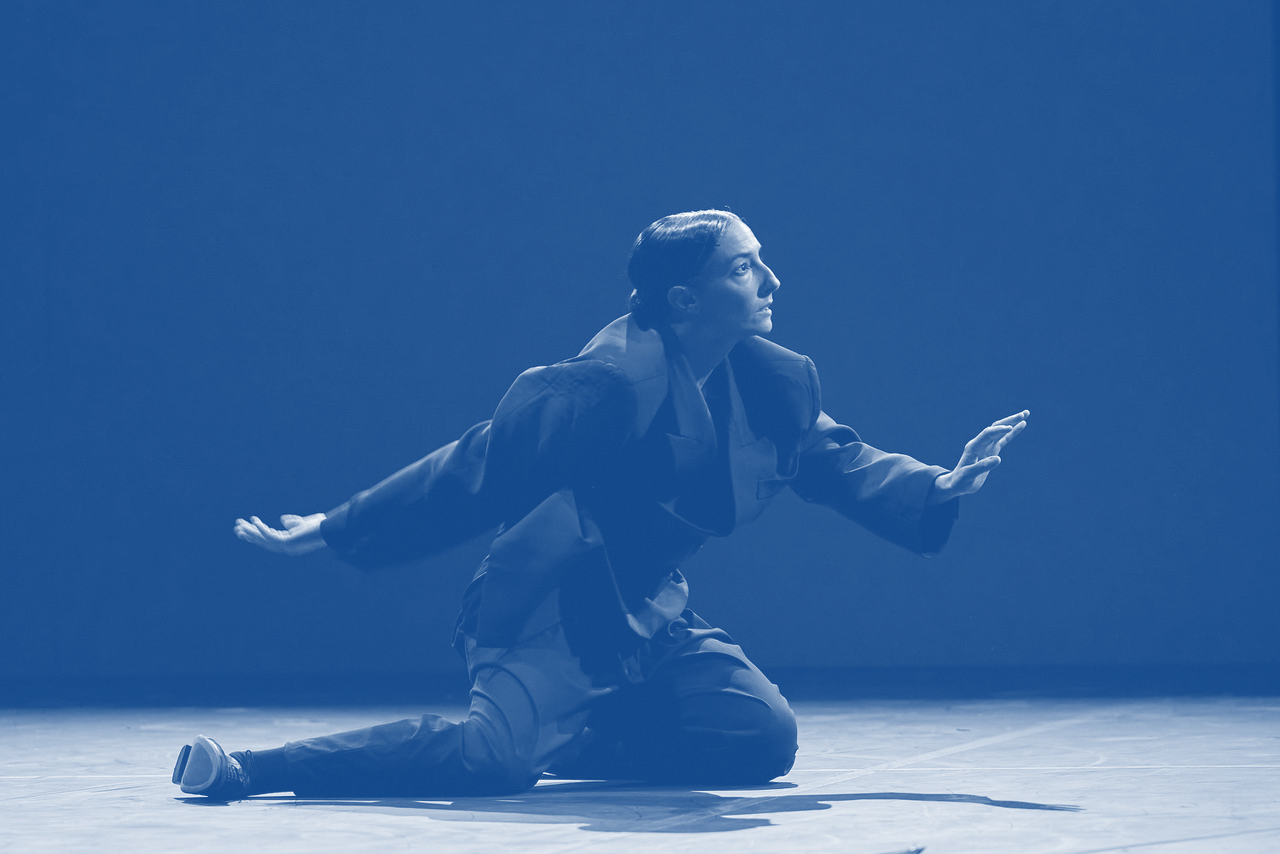
Created & Performed by: Lorena Nogal
Music: David Lang “Just (After Song of Songs), Lullabies of Europe “Nani, Nani, Mummies Baby (Romanian)”, Mica Levi “Death”, Benjamin Clementine “Quintessence”
“This piece is a manifesto about what is built from darkness and doubt. suggestions seen through a rift. A choreography that rests in the transition, a place to find the beauty that emerges from the acceptanc of the imperfection, the asymmetry, the unequal. a weak, vulnerable and unstructured body that is the reflection of a vibrating state”.
National Dance Award in the Performance Modality, 2024. Ministry of Culture
DALET (DA) (20’)
Madrid, Spain
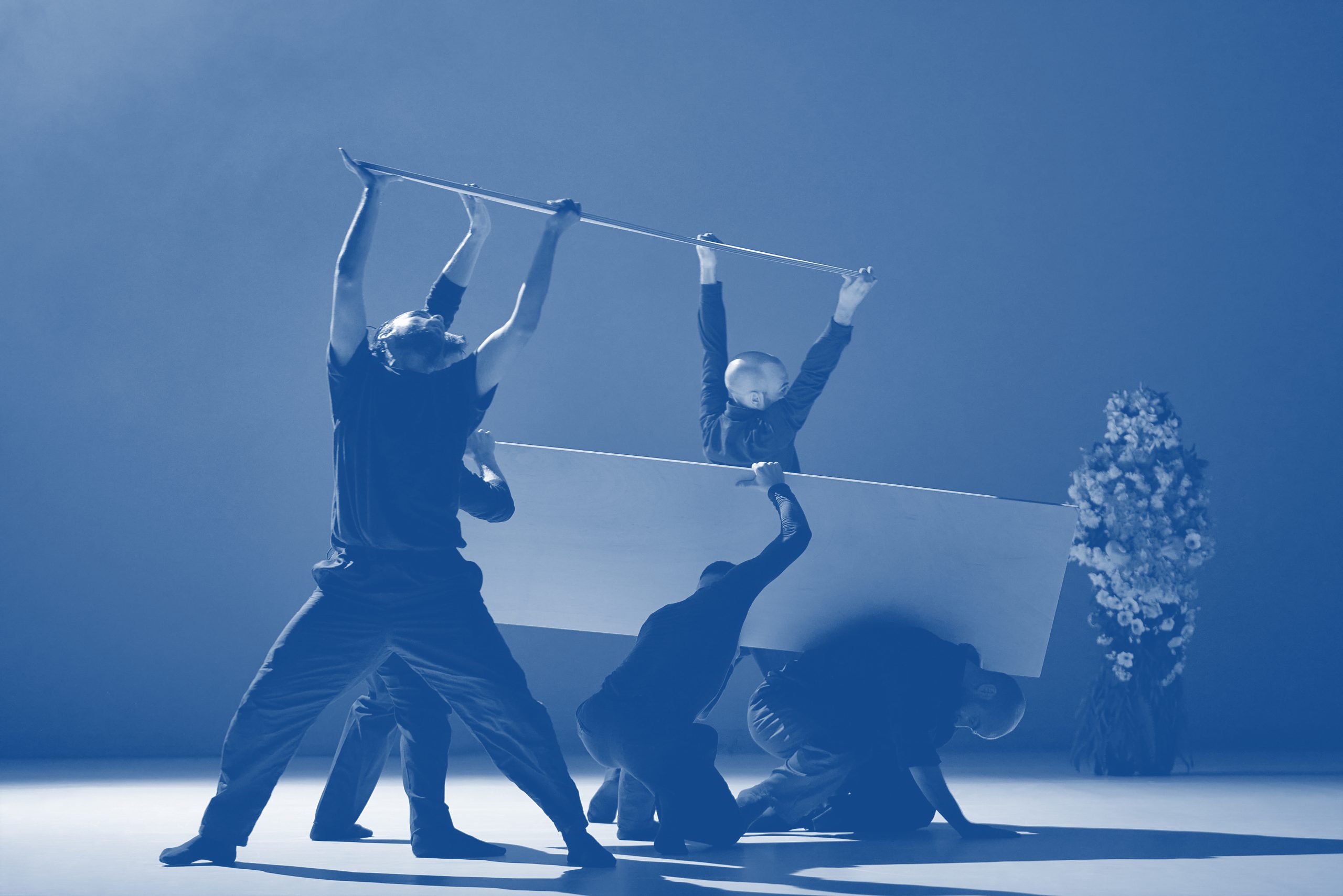
Created by: Daniel Abreu
Performed by: Abián Hernández, Alberto Almazán, David Vilarinyo, Daniel Rodríguez, Theo Vanpopheringe & Daniel Abreu
Music by: Michael Wall “Ritual, Referencies and Confessions”
With the support of: Ayuntamiento de Madrid, Comunidad de Madrid, Centro Coreográfico María Pagés, Centro Coreográfico Canal & Provisional Danza
“Dalet is a letter in the Hebrew alphabet making reference to a door. A door without a threshold for easier access. A way from the void to a form without dimensions. It talks of a journey through the desert, with mandatory steps taken countless times in the path of evolution. This symbol, and its ensuing energy, which permits us to move to another place, is the motor propelling this creation for seven dancers and two musicians. It is the idea of moving down a path, the point of departure being the place where a variety of characters are making their decisions. These figures, supported by their group, give meaning to a landscape full of symbols having to do with nature, its conquest, and reinterpretation. The humility of throwing oneself on the ground and hoping for the grass to grow on one’s skin is a recurrent image accompanying the whole creative process. So is the rendition of water in its stream, and dancing. Dancing, well aware that what is moving is the floor, and we are only reacting to it, through the air. The play moves from a part sustained in its gestures and dance, to a place of dreaminess and magical displays”.